Online Advertising Guide: Must-Have A/B Testing Tips for Higher ROI
In the ever-evolving world of digital marketing, mastering A/B testing is essential for businesses striving to maximize their advertising budgets. This online advertising guide focuses on how you can leverage A/B testing to enhance your campaigns, achieve higher conversion rates, and ultimately boost your return on investment (ROI). Whether you’re a seasoned marketer or just starting with online ads, understanding these crucial tips will give your campaigns an edge.
What is A/B Testing in Online Advertising?
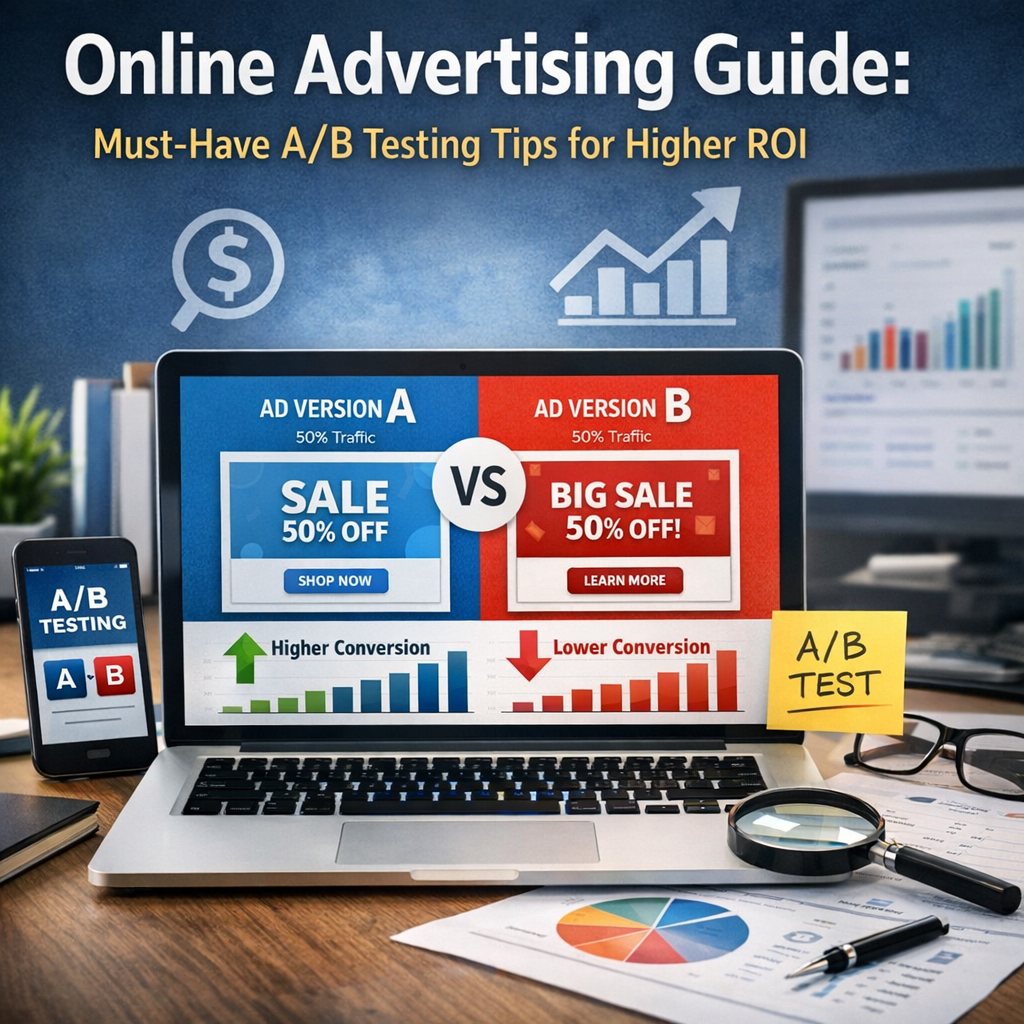
A/B testing, also known as split testing, is the process of comparing two versions of an ad or landing page to see which one performs better. By randomly showing different variants (A and B) to your audience, you can assess which elements — such as headlines, images, call-to-actions, or colors — have the most positive impact on user behavior. This scientific approach enables data-driven decisions instead of relying on guesswork.
Why A/B Testing is Crucial for Online Advertising Success
Without A/B testing, many advertisers waste budget on ads that don’t resonate with their audience. Even subtle differences in ad copy or design can significantly affect click-through rates, conversions, and overall ROI. A well-executed A/B test reduces risks, mitigates assumptions, and helps you continuously optimize your campaign towards better results.
Key A/B Testing Tips from the Online Advertising Guide
1. Define Clear Objectives Before Starting Your Test
Before launching an A/B test, define what success looks like. Are you aiming to increase click-through rates, drive more sign-ups, or boost sales? Setting specific goals will guide which elements you test and how you measure performance. Without clear objectives, it’s easy to get lost in numbers and draw inaccurate conclusions.
2. Test One Variable at a Time
To accurately pinpoint what is influencing user behavior, change only one element per test. This could be the headline, image, button text, or even the color scheme. Testing multiple variables simultaneously can lead to confusion about which change actually drove the results. For example, if you test a new headline and a different call-to-action in the same experiment, you won’t know which one improved conversions.
3. Utilize a Sizable and Relevant Audience
Ensure your sample size is large enough to produce statistically significant results. Testing with too small an audience can yield misleading data due to random variability. Additionally, your test audience should reflect your target market to obtain insights relevant to your broader campaigns.
4. Choose the Right Metrics to Track
Metrics like click-through rate (CTR), conversion rate, bounce rate, and cost per acquisition (CPA) are critical in evaluating your variants. Depending on your objectives, prioritize metrics that align with your desired outcomes. Tracking irrelevant metrics might result in optimizing for vanity figures rather than actual ROI improvement.
5. Run Tests Long Enough to Collect Data
While it’s tempting to reach conclusions quickly, running A/B tests for an adequate duration is essential. A test should collect enough data to demonstrate consistent trends rather than short-term fluctuations. Depending on traffic volume, this may range from a few days to several weeks.
6. Implement Changes Based on Data, Not Gut Feeling
One of the greatest benefits of A/B testing is that it replaces subjective decisions with data-backed insights. Don’t disregard results just because they defy your expectations or preferences. Instead, follow what the data shows and iterate accordingly.
7. Keep Testing Continuously
The digital landscape and user preferences constantly shift. A winning ad today might not perform well six months later. Adopt a mindset of continuous improvement by regularly running A/B tests to optimize new campaigns and revisit older ones.
Tools to Help Simplify A/B Testing
Several platforms integrate A/B testing capabilities directly within your advertising workflow:
– Google Ads Experiments: Allows you to test different ads, keywords, and bidding strategies.
– Facebook Ad Manager: Provides split testing features for creative and audience targeting.
– Optimizely: A dedicated A/B testing and experimentation platform ideal for landing pages and websites.
– VWO (Visual Website Optimizer): Offers robust testing and analytics for marketers.
Choosing the right tool depends on your advertising channels, budget, and technical expertise.
Common Pitfalls to Avoid in A/B Testing
– Stopping tests too early: Incomplete data can lead to false positives.
– Ignoring external factors: Seasonal trends, marketing events, or competitor actions can skew results.
– Testing insignificant differences: Focus on changes meaningful enough to impact user behavior.
– Failing to document: Keep records of test parameters and outcomes to build knowledge over time.
Conclusion: Elevate Your Campaigns with Smart A/B Testing
This online advertising guide emphasizes that systematic A/B testing is a cornerstone of effective campaign management. By defining clear goals, testing one variable at a time, and relying on data-driven decisions, you can unlock higher engagement and better ROI. Continuously experiment, analyze, and optimize to stay ahead in a competitive digital marketplace. With these must-have tips, your online advertising efforts will become smarter, more efficient, and ultimately more profitable.