Marketing Funnel Optimization: The Ultimate A/B Testing Playbook Revealed
Marketing funnel optimization is the cornerstone of modern digital marketing. Without a finely tuned funnel, even the best campaigns can fail to convert leads into loyal customers. To ensure every stage of your funnel works as effectively as possible, A/B testing stands out as an indispensable technique. In this article, we’ll dive deep into how to use A/B testing to power your marketing funnel optimization efforts—revealing strategies, best practices, and insights to help you maximize conversions and boost ROI.
Understanding Marketing Funnel Optimization
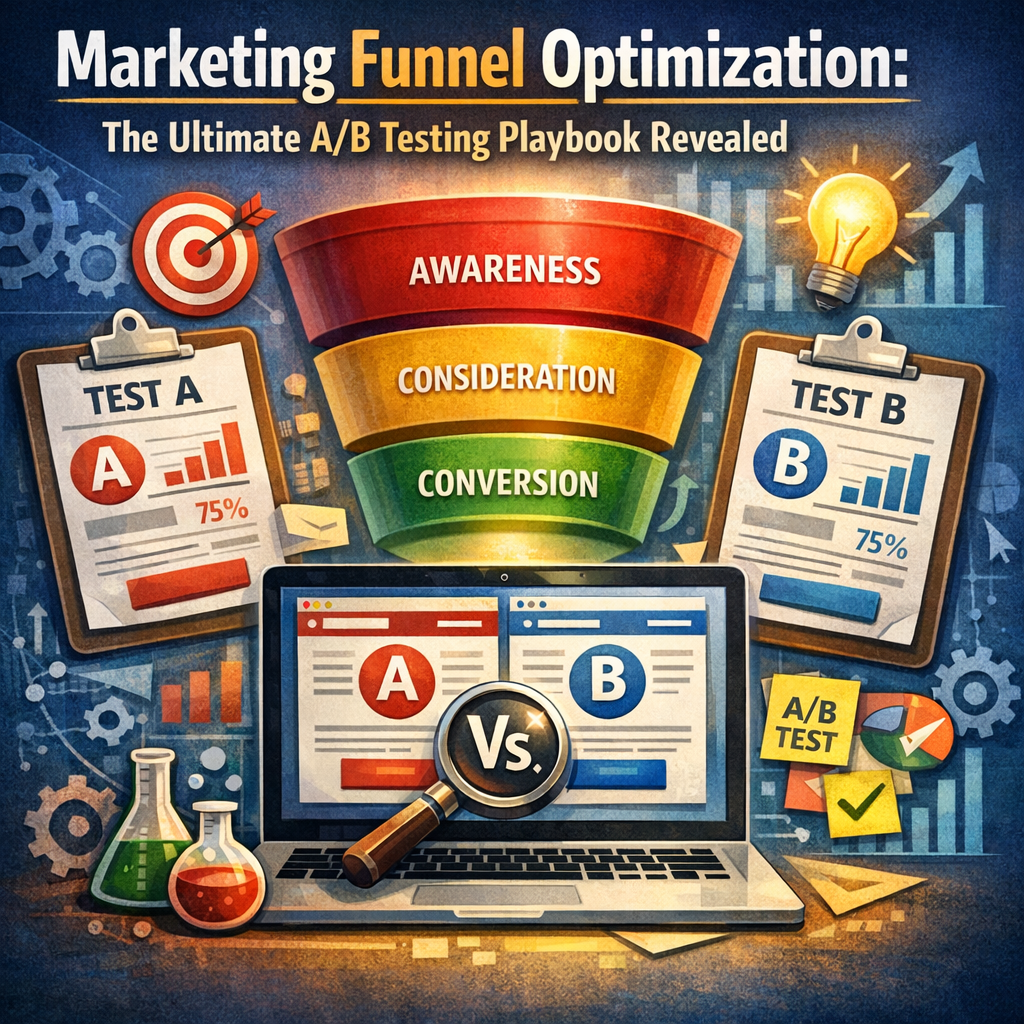
Before exploring the A/B testing playbook, it’s important to understand what marketing funnel optimization entails. Simply put, the marketing funnel represents the pathway your prospects travel—from awareness to interest, decision, and finally, action (purchase). Each phase of this journey is an opportunity to engage with prospects and guide them toward becoming customers.
Marketing funnel optimization involves continually analyzing these stages, identifying weak points, and tweaking strategies to improve conversion rates at every step. This process is dynamic and data-driven, requiring regular testing and refinement.
Why A/B Testing is Essential for Marketing Funnel Optimization
A/B testing, also known as split testing, allows marketers to compare two variations of a webpage, email, or ad to see which performs better. When applied properly, this method minimizes guesswork and provides concrete data, making it ideal for funnel optimization.
Using A/B testing, marketers can:
– Identify which headlines, images, or calls to action resonate most
– Understand user behaviors across different funnel stages
– Reduce bounce rates by testing different landing page designs
– Increase conversions by refining form layouts or button placements
Without A/B testing, optimization efforts are largely based on assumptions rather than actual user preferences.
The Ultimate A/B Testing Playbook for Marketing Funnel Optimization
Here’s a step-by-step guide to employing A/B testing effectively to optimize your marketing funnel:
1. Set Clear, Measurable Goals
Begin with defining what success looks like for each funnel stage. Whether it’s increasing the click-through rate (CTR) on an ad, form submission rates on a landing page, or product purchases, having specific goals allows for meaningful testing.
2. Map Out Your Funnel and Prioritize Testing Areas
Break down your funnel into actionable touchpoints—for example:
– Awareness: Ad copy, social media posts
– Interest: Landing pages, lead magnets
– Decision: Product pages, pricing tables
– Action: Checkout pages, confirmation emails
Prioritize testing those areas where you experience the highest drop-offs or lowest conversion rates.
3. Develop Hypotheses for Each Test
Based on analytics and user feedback, formulate a hypothesis. For example: “Changing the CTA button color from green to orange will increase clicks by 10%.” This creates a clear foundation for testing and avoids random changes.
4. Design and Implement Your A/B Tests
Use A/B testing tools like Google Optimize, Optimizely, or VWO to create variations and split traffic evenly among options. Ensure tests are run long enough to gather statistically significant results—typically a few thousand visitors depending on traffic volume.
5. Analyze Results and Act on Insights
Evaluate the data using relevant metrics—conversion rate, bounce rate, average session duration, etc. If one variant clearly outperforms the other, implement the winning changes immediately to improve the funnel.
6. Repeat and Iterate
Marketing funnel optimization is an ongoing process. Use insights from one A/B test to inform new hypotheses and continue testing. Over time, this iterative approach compounds improvements dramatically.
Common A/B Testing Mistakes to Avoid in Marketing Funnel Optimization
While A/B testing is a powerful tool, several pitfalls can undermine its effectiveness:
– Testing too many variables at once: This dilutes the impact and confuses results. Test one element at a time.
– Running tests for too short a period: This leads to unreliable data. Ensure tests reach statistical significance.
– Ignoring mobile optimization: Most traffic is mobile now, so test and optimize for mobile devices separately.
– Neglecting qualitative data: Combine A/B testing with user feedback and heatmaps to get fuller insights.
Real-Life Example: Boosting Conversions with Funnel Optimization
A leading e-commerce brand recently improved sales by 25% through marketing funnel optimization using A/B testing. They identified high drop-off rates on their checkout page. After testing variations in form length, button colors, and trust badges, they discovered that a simpler checkout form coupled with a prominent trust badge increased conversions significantly.
This example highlights how even subtle tweaks informed by data can lead to sizable gains.
Final Thoughts on Marketing Funnel Optimization
Marketing funnel optimization is not a one-time project but a continuous journey. Leveraging A/B testing systematically is the ultimate way to understand what truly works for your audience and eradicates guesswork. By setting clear goals, testing strategically, and iterating relentlessly, you can convert more prospects, increase customer lifetime value, and ultimately drive sustainable business growth.
Invest in mastering A/B testing as a core part of your marketing strategy and watch your marketing funnel evolve into a high-performing engine that consistently delivers results.