Paid Traffic Strategy: Ultimate Must-Have Guide for Effortless Ad Creative Optimization
In the fast-evolving digital marketing landscape, having a solid paid traffic strategy is essential for businesses that want to drive quality traffic, boost conversions, and maximize return on ad spend (ROAS). One of the most critical components of this strategy is effective ad creative optimization, which can transform ordinary campaigns into high-performing engines of growth without exponentially increasing budgets. This guide delves into tried-and-true techniques and innovative approaches that will help you streamline your ad creative optimization effortlessly.
Understanding Paid Traffic Strategy and Its Importance
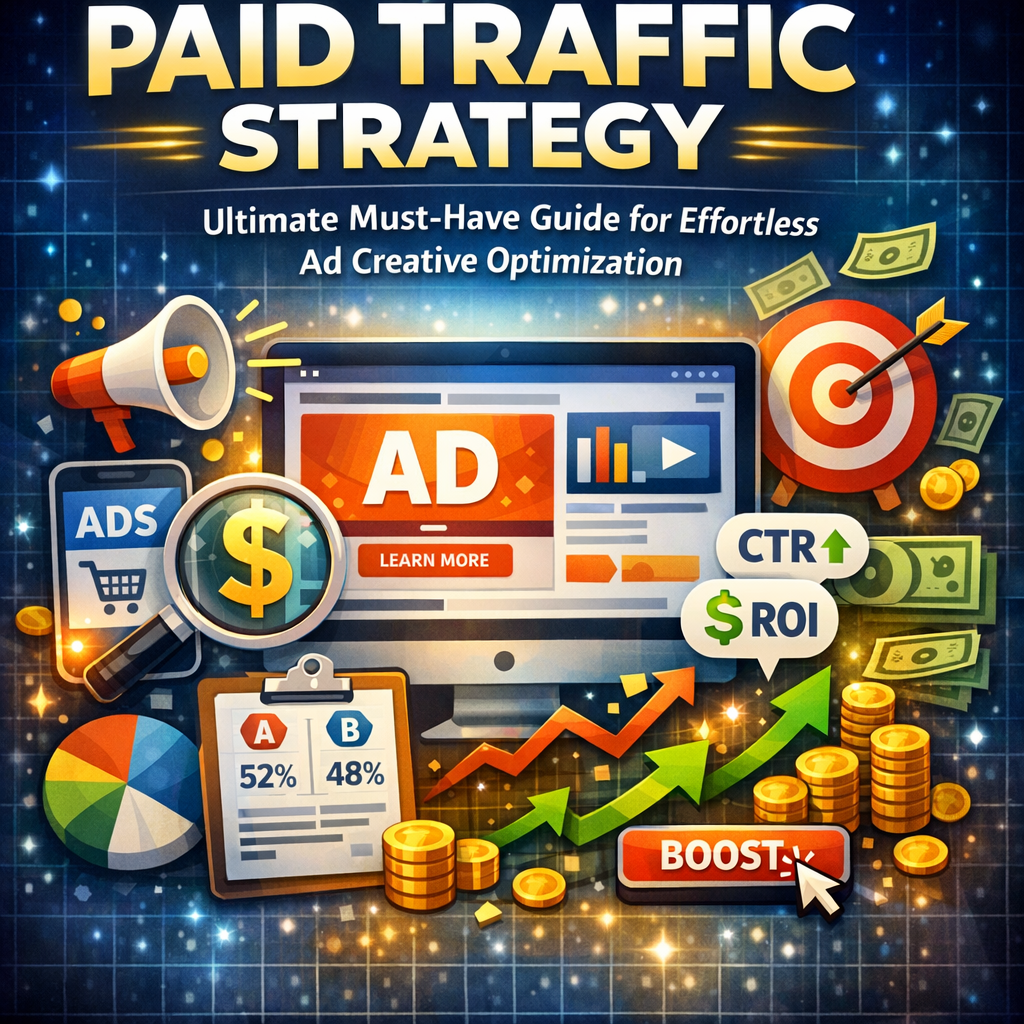
A paid traffic strategy involves paying for ad placements on various platforms such as Google Ads, Facebook, Instagram, LinkedIn, and more, to attract relevant visitors to your website or landing pages. Unlike organic traffic, paid traffic offers immediate visibility and targeting precision, enabling marketers to reach specific demographics, interests, and behaviors.
However, raw traffic alone doesn’t guarantee success. The quality and creativity of your ads largely determine the effectiveness of your campaigns. This is where ad creative optimization plays a crucial role. Optimized creatives help you connect with your audience emotionally and intellectually, increasing click-through rates (CTR), lowering cost-per-click (CPC), and ultimately driving conversions.
The Foundation of a Strong Paid Traffic Strategy: Creative Testing
Creative testing is the backbone of any effective paid traffic strategy. Without testing, you’re essentially throwing darts in the dark, hoping one hits the mark. Here’s how to build a systematic testing framework:
1. Start With Hypotheses Based on Audience Insights
Before launching different ad variations, understand your target audience’s preferences, pain points, and behaviors. Use data from your analytics platforms and customer feedback to create hypotheses. For example, if your audience responds better to emotional storytelling, your first creative batch should reflect that.
2. Use A/B Testing for Incremental Improvements
Deploy A/B testing to compare two or more versions of an ad to see which performs better. Be it different headlines, images, videos, or call-to-actions (CTAs), testing small changes can lead to significant improvements. Ensure you’re testing one element at a time to isolate what truly impacts performance.
3. Test Across Multiple Platforms
Your audience might respond differently depending on where your ads appear. Test creatives on Facebook versus LinkedIn or Google Display Network versus Search Ads. This will provide data about which combination of platform and creative style yields the highest ROI.
Key Elements of Ad Creative Optimization
Optimizing ad creatives involves fine-tuning various components. Let’s explore these critical elements in more detail:
Visuals: Capturing Attention Instantly
Humans process images 60,000 times faster than text. Therefore, the visuals you choose need to communicate your message instantly. High-quality images, eye-catching colors, or engaging video thumbnails can make all the difference. Experiment with diverse visual formats like lifestyle shots, product demos, or user-generated content to find what resonates best.
Headlines and Copy: Clear, Concise, and Compelling
Your headline is the hook, and it needs to be persuasive enough to stop scrollers and grab attention. Utilize powerful words, numbers, and questions that speak to the audience’s needs or curiosity. Keep ad copy succinct but engaging, emphasizing benefits rather than features.
Call-to-Action (CTA): Guide Your Audience
A well-placed and compelling CTA directs users towards the next step, whether it’s “Shop Now,” “Get Your Free Trial,” or “Learn More.” Test different CTAs to find which prompts higher engagement or conversions.
Leveraging Technology for Effortless Optimization
Modern paid traffic strategies benefit greatly from technology-driven tools and automation:
Use AI-Powered Creative Analytics
Many platforms now offer AI tools that analyze your ad creatives’ performance in real time, suggesting improvements or automatically adjusting elements based on audience feedback. This minimizes manual experimentation and accelerates optimization cycles.
Dynamic Creative Optimization (DCO)
DCO technology allows you to create multiple versions of an ad using interchangeable components (headline, image, CTA), dynamically shown to different users based on their behavior and preferences. This ensures personalized ads at scale without extra effort.
Employ Heatmaps and Viewer Engagement Metrics
Heatmaps reveal which parts of your ads attract the most attention. Use this data to tweak designs so that critical components like CTAs or offers get maximum visibility.
Monitoring and Scaling Your Paid Traffic Strategy
Once you have optimized your ad creatives, continuous monitoring is key. Regularly review metrics such as CTR, conversion rate, CPC, and ROAS. Identify campaigns or creatives that consistently perform well and allocate more budget toward scaling them. Simultaneously, pause or rework underperforming ads to avoid wasted spend.
Conclusion
Implementing a cohesive paid traffic strategy with a focus on effortless ad creative optimization can revolutionize your digital marketing efforts. By combining audience insights, systematic testing, creative refinement, and technology-driven automation, you can boost your campaign performance while saving time and resources. Remember, paid ads are not just about spending money; they’re about spending it smartly. Mastering these optimization techniques will help you make informed decisions and achieve long-term growth with every dollar invested.