Ad Funnel Strategy: Must-Have Conversion Rate Optimization for Best ROI
In today’s competitive digital marketing landscape, an effective ad funnel strategy is essential for maximizing return on investment (ROI). Businesses that invest in paid advertising often face challenges in converting clicks into meaningful actions, whether that’s a sale, lead, or sign-up. Without a well-designed funnel, even the most carefully crafted ads can fall short of their potential. Understanding how to optimize each stage of the ad funnel can dramatically improve conversion rates, reduce wasted ad spend, and boost overall campaign success.
What Is an Ad Funnel Strategy?
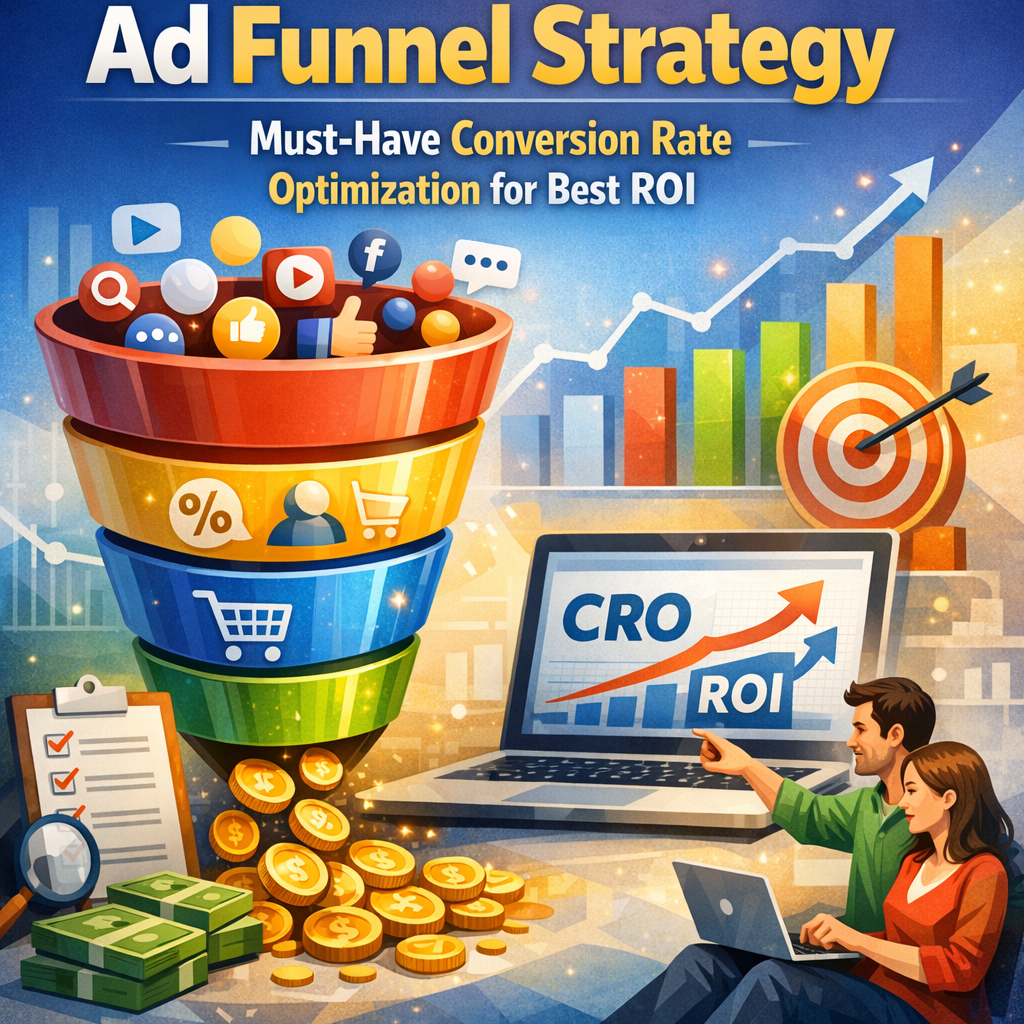
An ad funnel strategy refers to the systematic process of guiding potential customers through different stages of awareness, consideration, and decision-making by using targeted advertising. This funnel approach helps marketers nurture prospects by delivering relevant messages tailored to where they are in the buying journey. The ultimate goal is to convert casual browsers into loyal customers by meeting their needs at every step.
The funnel typically includes the following stages:
– Top of Funnel (ToF): Awareness and Interest
– Middle of Funnel (MoF): Consideration and Evaluation
– Bottom of Funnel (BoF): Conversion and Purchase
By designing ads that resonate differently at each stage, businesses can reduce friction and encourage progression along the funnel.
Why Conversion Rate Optimization Matters in an Ad Funnel Strategy
Conversion rate optimization (CRO) is a critical component of an ad funnel strategy. It focuses on increasing the percentage of visitors who complete a desired action after engaging with your ad and landing page. Without continuous CRO, your ad funnel becomes leaky—meaning you’ll lose prospects at every stage, resulting in subpar ROI.
Optimizing your funnel improves not only the number of conversions but also the quality, leading to more high-value customers and better long-term results. Here are some reasons why CRO is a must-have in any ad funnel strategy:
– Maximize budget efficiency: With better conversion rates, every advertising dollar works harder.
– Improve ad relevance: Testing and analyzing ad creatives enhance engagement.
– Shorten sales cycles: Clear and persuasive messaging moves prospects faster through the funnel.
– Build brand trust: A seamless user experience increases confidence in your brand.
Crafting an Effective Ad Funnel Strategy with CRO Techniques
1. Awareness Stage: Capturing Attention with Compelling Ads
At the top of the funnel, your focus is on reaching a wide audience and creating brand awareness. Your ads should be visually appealing and convey your unique value proposition clearly. Use targeting options on platforms like Facebook and Google Ads to ensure your ads reach people who are most likely to be interested.
To optimize conversions in this stage:
– Use engaging headlines and short, benefit-focused ad copy
– Incorporate eye-catching visuals or videos
– Test different creatives to determine what resonates best
2. Consideration Stage: Build Interest with Relevant Content
Once potential customers are aware of your brand, the middle of the funnel aims to nurture their interest and build trust. Here, tailor your messaging to answer common questions, showcase your product’s features, and differentiate yourself from competitors.
Conversion optimization tips for this stage include:
– Create retargeting ads that remind users who interacted with your site but didn’t convert
– Use testimonials, case studies, or demos to reduce hesitation
– Simplify the landing page design and reduce distractions
3. Decision Stage: Make Conversions Easier and More Appealing
At the bottom of the funnel, prospects are ready to take action. Your ads and landing pages should focus on clear calls to action (CTAs), attractive offers, and minimizing any remaining objections.
Effective CRO tactics for conversion include:
– Streamline the checkout or sign-up process with fewer steps
– Use urgency or scarcity tactics like limited-time discounts
– Provide multiple payment or contact options
– Test variations of CTAs to see which drive higher conversions
Measuring and Improving Your Ad Funnel Strategy
Data-driven decisions are central to optimizing an ad funnel strategy. Track key performance indicators (KPIs) such as click-through rate (CTR), bounce rate, conversion rate, and cost per acquisition (CPA) at each funnel stage. Use tools like Google Analytics, Facebook Pixel, and heatmaps to gain insights into user behavior.
Regularly A/B test your ad creatives, landing pages, and offers to identify what improvements yield the best results. Remember, CRO is an ongoing process, not a one-time fix.
Conclusion
An effective ad funnel strategy is about much more than just creating an ad and hoping for the best. It requires a thoughtful approach to guiding prospects, combined with continuous conversion rate optimization to minimize drop-offs and maximize ROI. By understanding your audience’s journey and applying targeted messaging and testing at every funnel stage, you’ll turn more clicks into customers and elevate your advertising effectiveness.
Investing in refining your funnel and CRO will pay dividends, creating a scalable, efficient marketing system that drives sustainable growth for your business. Start by analyzing your current funnel, identifying bottlenecks, and implementing the tactics outlined here—your bottom line will thank you.